
www.engenharia-brasil.com
26
'26
Written on Modified on
Brazilian Gripen E Production and Industrial Integration
Saab, Embraer and the Brazilian Air Force cooperate to localize fighter aircraft production and develop advanced aerospace manufacturing capabilities in Brazil.
www.saab.com
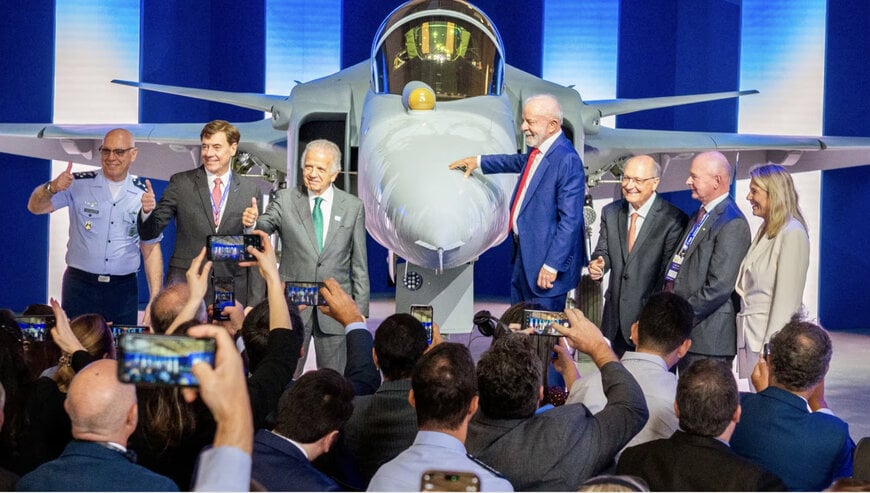
Saab, Embraer, and the Brazilian Air Force (FAB) are collaborating to produce the Gripen E fighter aircraft in Brazil, establishing a localized aerospace manufacturing capability. The programme integrates advanced avionics, network-centric systems, and distributed production across national and international supply chains.
Context of the Cooperation
The cooperation brings together Saab, Embraer, and the Brazilian Air Force to address the strategic requirement for domestic production of high-performance combat aircraft. The programme originates from a 2014 contract covering 36 aircraft, including both single-seat Gripen E and two-seat Gripen F variants.
The primary challenge involves transferring complex aerospace manufacturing capabilities, including aerostructures, systems integration, and flight testing, into Brazil. This requires coordination across industrial partners, compliance with aerospace standards, and the development of a qualified workforce and supply chain.
Technical Solution and Responsibilities
The cooperation is based on the localized production of the Gripen E fighter aircraft, a multi-role platform designed for air defence, reconnaissance, and strike missions. The aircraft incorporates advanced avionics, sensor fusion, and a network-centric architecture that enables real-time data exchange within tactical formations.
Saab is responsible for overall aircraft design, core systems, and technology transfer, including engineering processes and production methodologies. Embraer leads final assembly, systems integration, and industrial operations at its Gavião Peixoto facility. The Brazilian Air Force defines operational requirements, supports testing phases, and integrates the aircraft into active service.
The production model includes distributed manufacturing, with aerostructures produced both locally and at Saab’s Brazilian facility in São Bernardo do Campo. Standardized interfaces and modular subsystems enable efficient integration and maintenance.
Deployment and Integration
Aircraft are assembled at Embraer’s industrial complex in Gavião Peixoto and undergo functional verification and production flight testing prior to delivery. Following acceptance, the aircraft are deployed to operational units, including the First Defence Group at Anápolis Air Force Base.
The programme incorporates digital infrastructure elements such as mission system integration and data-link capabilities, allowing interoperability with existing defence networks. Implementation includes phased delivery, with locally produced units following earlier imported aircraft already in service.
Applications and Use Cases
The Gripen E is deployed in air superiority, surveillance, and rapid response roles, including Quick Reaction Alert (QRA) missions. Its sensor fusion and data-link capabilities support coordinated operations, enabling pilots to access aggregated battlefield information and improve decision-making.
The aircraft is suited for operations in complex and contested environments, where integrated sensors and electronic warfare systems enhance threat detection and response.
Results and Expected Impact
The rollout of the first aircraft produced in Brazil demonstrates the establishment of a domestic aerospace manufacturing capability aligned with international defence standards. The programme supports industrial automation and workforce development within the national defence sector.
Operationally, localized production is expected to improve fleet sustainment through reduced logistics dependency and enhanced maintenance control. The cooperation also positions Brazil as a potential regional hub for aerospace manufacturing and support within the Gripen programme.
Edited by an industrial journalist, Sucithra Mani, with AI assistance.
www.saab.com
